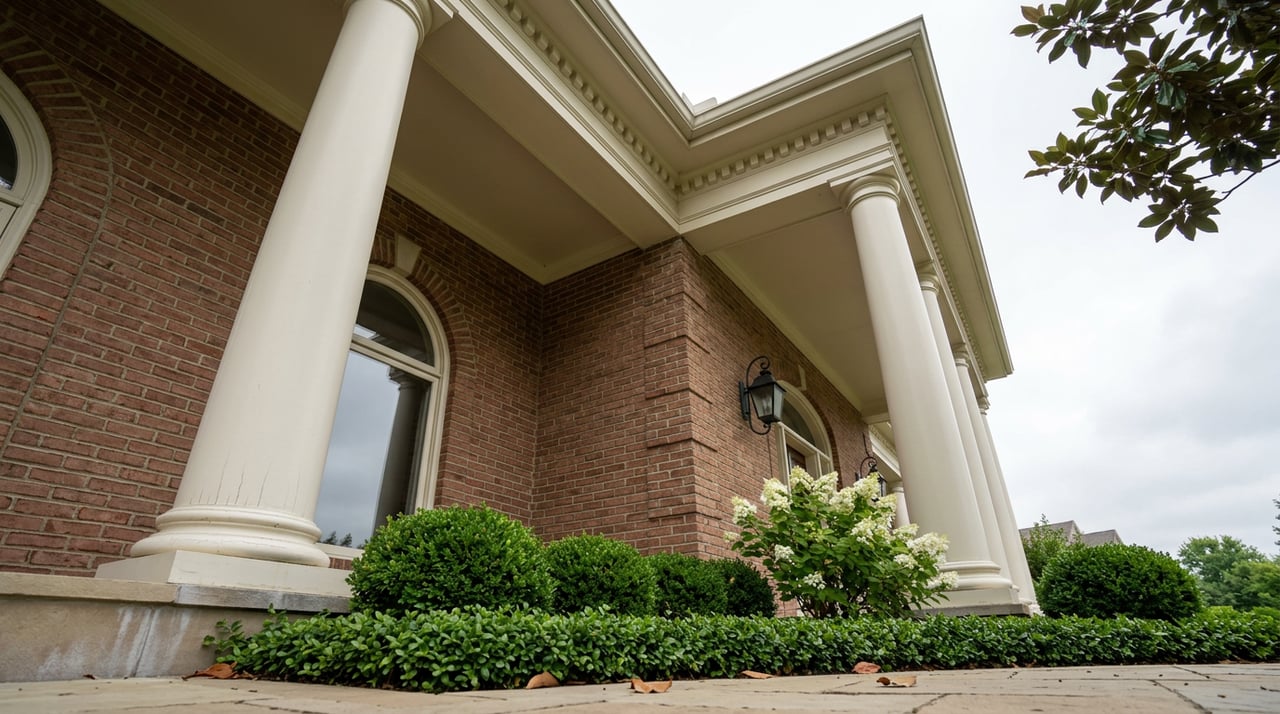
Ask most owners inside Roswell's Historic District what they need permission for before they list, and paint tops the list. Swap the shutters, repaint the columns a crisper white, match the trim to what the listing photos will need, and surely the Historic Preservation Commission has to sign off first. That assumption can draw attention away from the exterior work that requires review.
State law settled the paint question over a decade ago, and it settled it the opposite way most owners expect.
What the Historic Preservation Commission Actually Reviews
The Roswell Historic Preservation Commission requires a Certificate of Appropriateness for material exterior changes: new construction, alterations to a building's exterior architectural appearance, demolition or moving of structures, and changes to exterior environmental features. That's the commission's real jurisdiction, and it covers a lot of ground.
It does not cover paint color. A 2014 opinion from the Georgia Attorney General's office concluded the HPC has no authority to regulate exterior paint on a building inside the district, because Georgia's own definition of "material change in appearance" specifically excludes paint alterations. The statute lists what counts, walls, fences, steps, pavements, changes to a structure's form, and then carves paint out by name. A city attorney had already reached the same conclusion before the AG weighed in, and the opinion simply confirmed it.
So if you're planning a pre-listing refresh on a contributing property near Mimosa Boulevard, the color coat isn't the bottleneck. What is worth checking first is scope: does the National Register nomination, which covers roughly 120 acres and includes landmarks like Bulloch Hall and Barrington Hall, actually match the boundary the city enforces? It doesn't. Roswell's local historic district, the one the HPC administers design review for, spans about 640 acres, considerably larger than the National Register footprint. A property can sit outside the narrower Register lines and still fall inside the broader local overlay that triggers a Certificate of Appropriateness. Checking a National Register map alone isn't enough due diligence. The city's own overlay determines what you need approval for.
The Step Most Pre-List Timelines Miss
Here's where the real friction sits. If your pre-listing work includes exterior work that requires HPC review, such as a new roofline, a rebuilt porch, or a rear addition, that needs a Certificate of Appropriateness before it happens, and the HPC only meets once a month. Roswell's 2026 calendar has sessions scheduled for the second Wednesday of most months, at 6 p.m. in the Council Chambers at 38 Hill Street, with September, October, and December on that pattern and November shifted to a Thursday. Miss the submission window ahead of that meeting and your project, along with your listing date, slides a full month.
And clearing the HPC doesn't finish the job. Roswell's building division still enforces standard state building, electrical, plumbing, and mechanical codes on top of historic design review, so a renovation can involve both preservation approval and ordinary permit review running on separate clocks. The ordinary permit side typically moves in 4 to 10 days depending on project type. The historic design review side moves once a month. Sellers who plan a timeline around the fast track and forget the slow one are the ones who end up delaying their launch.
A realistic pre-list sequence for a contributing property looks like this:
- Confirm whether your planned exterior work requires HPC review, rather than relying on exterior visibility alone to determine if a Certificate of Appropriateness applies.
- Submit ahead of the monthly HPC meeting cutoff, not on the meeting date itself.
- Set your listing date against the slower of the two review tracks, not the faster one.
The Tax Credit Line You'll See in Other Listings
Georgia runs two separate state tax incentive programs for historic property, and conflating them in marketing copy is an easy way to overpromise.
| Program | Who qualifies | Annual cap | Per-project cap | Status as of mid-2026 |
|---|---|---|---|---|
| Georgia Department of Community Affairs: Historic Home Tax Credit | Owner-occupied primary residences, locally designated or contributing to a local district | $5 million statewide per year | Up to $100,000 | Active. Applications accepted starting October 1, 2025, with rehabilitation work permitted to begin January 1, 2026 |
| State Income Tax Credit for other certified structures | Income-producing or larger certified rehabilitations | $30 million statewide per year | $5 million or $10 million depending on project | Backlogged. Demand has exceeded the annual cap so heavily that projects applying in 2025 have already been awarded 2028 and 2029 allocations |
That second program is effectively closed to new applicants for the next several years, according to the Georgia Trust for Historic Preservation, and a legislative fix meant to raise the cap, House Bill 376, passed the General Assembly this spring only to be vetoed by Governor Kemp in May 2026. The Georgia Trust said the veto leaves those larger rehabilitation projects without a funding path for years.
If you're advertising a Roswell historic home as "eligible for the state historic tax credit," specify which program you mean. A buyer planning a modest owner-occupied rehab under $100,000 may still find the door open. A buyer picturing a larger, income-producing restoration project should know that door is currently backed up for years, regardless of what the listing copy implies.
What the Median Doesn't Price In
Citywide, Roswell's median sale price sat at $645,000 in February 2026, up 4.9% year over year, with homes moving in a median of 47 days on market. By August 2026, the median list price had climbed to roughly $699,000, with days on market holding near that same 47-day mark. Those numbers blend everything: decades-old Greek Revival homes inside the historic overlay and new construction well outside it.
What that blended figure can't show you is the extra time a COA cycle adds before a contributing property ever gets photographed. A seller outside the district who wants new exterior paint or a rebuilt front stoop can typically clear standard permitting in under two weeks and list on schedule. A seller inside the 640-acre overlay planning the same rebuilt stoop is working against a monthly meeting calendar first. That difference doesn't show up in a median or a days-on-market stat. It shows up in how far ahead of a target list date the prep work actually has to start.
A Few Questions Worth Asking Before You List
Does the HPC review interior renovations? No. Its authority covers qualifying material changes to a building’s exterior and exterior environmental features within the district, not interior work.
Selling or buying inside Roswell's Historic District rewards precision more than most transactions do. Knowing what the HPC reviews and planning around its monthly meeting schedule can help keep a listing timeline on track.
If you're weighing a sale or purchase of a contributing property in Roswell and want a timeline built around what the city's actual review calendar allows, Casey Rutherford can walk through the specifics with you. Schedule a Market Consultation to start mapping the real sequence, not the assumed one.
This article is general information, not legal, tax or financial advice. Consult a qualified professional about your situation.